Minggu, 03 April 2016

Posted by hownottolivealife.blogspot.com In | No comments

Ebook The Story of the Human Body: Evolution, Health, and Disease

Leisure time becomes an extremely priceless time for lots of people. This is the time to lose all weary, exhausted, and also burnt out tasks or obligations. However, having too long period of time will make you really feel bored. In addition, you will certainly really feel that so when you have no tasks. To encounter the small problem, we reveal a publication The Story Of The Human Body: Evolution, Health, And Disease that can be a means to accompany you while remaining in the spare time. It can be reviewing material, not as the cushion naturally.

The Story of the Human Body: Evolution, Health, and Disease

The Story of the Human Body: Evolution, Health, and Disease


The Story of the Human Body: Evolution, Health, and Disease


Ebook The Story of the Human Body: Evolution, Health, and Disease

When someone pertains to you to see the library and obtain some books to review, exactly what's your reaction? In some cases, that's not the appropriate time to see it. Yeah, careless is the huge factor of why lots of people opt to most likely to the collection. You could additionally have no adequate time to opt for. Now, we introduce for you reserve soft documents or online publication to check out. Without going to the collection, without spending time for mosting likely to guide shops, this type of book is offered by on-line with net connection in the beginning.

If a publication from preferred author is presented, at some point several followers of them will straight purchase the book. Also any book kinds, yet are they actually reading the book? That understands? Thus, we will certainly reveal you a book by familiar writer qualified The Story Of The Human Body: Evolution, Health, And Disease This book will certainly give you some benefits if you really reviewed it. The first is you can obtain the new words as just what we have actually not known concerning it previously. We can also enhance the foreign language from reading this book. There are any.

To know just how guide will certainly be, it will be connected with the efficiency as well as appearance of guide. The topic of the book that you wish to review should be related to the topic that you require or the topic that you like. Checking out normal publication will certainly not be interested for you even you have kept in on your hands. This is one trouble to constantly solve. Yet below, when getting The Story Of The Human Body: Evolution, Health, And Disease as referral, you may not fret any more.

And then, when you really love to see exactly how the demands of this publication as good book, you can straight get it as impressive book. This book is truly once again advised in order to boost you to assume more and more. When The Story Of The Human Body: Evolution, Health, And Disease has been gathered, you should have recognized exactly how this publication is required. So, which time should be the very best time to start obtaining and also reading this book? Asap is the best response.

The Story of the Human Body: Evolution, Health, and Disease

Review

“Monumental . . . an epic voyage that reveals how the past six million years shaped every part of us—our heads, limbs, and even our metabolism. . . . Through Lieberman’s eyes, evolutionary history not only comes alive, it becomes the means to understand, and ultimately influence, our body’s future.”—Neil Shubin, author of Your Inner Fish   “Fascinating. . . . A readable introduction to the whole field and great on the making of our physicality.”—Nature   “Sweeping. . . . Convincingly makes the case for a wholesale rethinking of how we live our modern lives.’”—CommonHealth, WBUR   “Riveting, enlightening, and more than a little frightening. . . . No one understands the human body like Daniel Lieberman or tells its story more eloquently.”—Christopher McDougall, author of Born to Run“These are not debates to gloss over or reduce to simple statements of cause and effect—they are stories with scientific complexity and tremendous, sometimes contradictory accumulations of evidence and detail. The Story of the Human Body does full justice to those stories, to that evidence and to that detail, and brings them to bear on daily health and well-being, individual and collective.”—The Washington Post“[Lieberman] is a true expert in a system where architecture and history intersect: the human foot. He ably describes how behavior and anatomy can lead to foot injuries in long-distance runners.”—The Wall Street Journal“The ultimate science-based Paleo investigation. . . . Convincing. . . . A great read, and I recommend it highly for those of you who are interested in learning the facts about our biological roots, and how we can rationally apply ‘Paleo’ concepts to prevent and reverse modern ‘mismatch’ diseases.”—Dr. Ronald Hoffman, The Hoffman Center/Health Talk“Eloquent and precise . . . Lieberman is the first to point out that modern living and technology have made our lives better in many ways. Still, a look back at where we came from can tell us a lot about where we’re headed, he says—and how we might alter that course for the better.”—Grist“A doozy. . . . That humans are poorly adapted to our modern lifestyle of convenience foods, flat screens, and desk jobs isn’t very controversial. But how we best cope with this new reality often is. Lieberman takes on many popular notions, including barefoot running, the paleo diet, epigenetics, and a host of hot topics ranging from obesity and chronic disease to Nanny State politics.”—Outside“[Lieberman’s] evolutionary approach produces some counterintuitive surprises. . . . The Story of the Human Body is a reliable guide to a problem that is going to get worse before it gets better.”—The Guardian“In thoroughly enjoyable and edifying prose, Lieberman . . . leads a fascinating journey through human evolution. He comprehensively explains how evolutionary forces have shaped the human species as we know it. . . . He balances a historical perspective with a contemporary one . . . while asking how we might control the destiny of our species. He argues persuasively that ‘cultural evolution is now the dominant force of evolutionary change acting on the human body.’”—Publishers Weekly (starred review)“Lieberman gracefully combines paleontology, anatomy, physiology, and experimental biomechanics to clarify how the human body has evolved and how evolutionary design now clashes with the particularities of modern society. . . . An important book.”—Library Journal“Lieberman holds nothing back. . . . He cleverly and comprehensively points out the perils of possessing Paleolithic anatomy and physiology in a modern world and bemoans ‘just how out of touch we have become with our bodies.’. . . If we want to continue our phenomenal run as a species, it is essential to understand (and embrace) our evolutionary legacy.”—Booklist“A massive review of where we came from and what ails us now . . . Would that industry and governments take heed.”—Kirkus Reviews

Read more

About the Author

Daniel E. Lieberman is professor of human evolutionary biology and the Edwin M. Lerner II Professor of Biological Sciences at Harvard. He has written more than one hundred articles, many appearing in the journals Nature and Science. Lieberman is especially well known for his research on the evolution of the human head and the evolution of running, including barefoot running (earning him the nickname the Barefoot Professor). His research and discoveries have been highlighted widely in newspapers, magazines, books, news programs, and documentaries.

Read more

See all Editorial Reviews

Product details

Paperback: 480 pages

Publisher: Vintage; Reprint edition (July 1, 2014)

Language: English

ISBN-10: 030774180X

ISBN-13: 978-0307741806

Product Dimensions:

5.2 x 0.9 x 8 inches

Shipping Weight: 1 pounds (View shipping rates and policies)

Average Customer Review:

4.7 out of 5 stars

344 customer reviews

Amazon Best Sellers Rank:

#27,234 in Books (See Top 100 in Books)

I bought this book for Christmas for my son, who's a senior in high school and interested in biology. He read this book, then passed it to his sister, a nurse; they spent plenty of time discussing it, and both thoroughly enjoyed it.I just finished reading this book myself. It was a very detailed book. The author is a professor at Harvard, and teaches about evolution. The book delves into great detail about the divergence of early humans from great apes and chimps; his hypothesis is that evolution is driven by reproduction. At some point, humans evolved to have larger brains than other primates, which require much more energy (calories) to sustain, and hominids split from other primates, developing differing gathering skills over time, consuming different foods, and becoming ever more distinct species. It really is a fascinating chain of events.Where I felt the book began to lag was during his discussion of current disease, which is frequently caused by our bodies having not adapted or evolved to the way we've lived for the past few thousand years: in larger towns and, ultimately, cities; farming instead of gathering and hunting, thus giving our bodies less variety in our diets, etc. Much of this is no surprise, but the last section often felt like a lecture on the evils of modern life, which I found somewhat offputting. Still, overall this book was a very fine read.

I got a lot out of this book in terms of better understanding the reasons I've had so much trouble controlling my weight over my adult lifetime. In the last few years I've read over a dozen books citing modern research on the dangers of sugar, fat & salt. By understanding how these addictions (especially sugar in my case) affect my body, it's been possible for me - finally - to get myself following a healthy path. This book is a terrific addition to that course of self-study.This book delves into the evolutionary component of why we are like we are today. Truly understanding that goes a long way to helping me make better decisions on the kinds of foods I want to eat, how much and what kind of physical activity really helps me be healthy, and the importance of also getting enough good sleep. Much more than that is covered on what the modern human body has adapted to over the last 600 generations -- and more importantly, how much we've changed due to cultural evolution since man invented farming and the agricultural revolution changed everything. The lifestyle choices we have today were unknown tens of thousands of years ago and our bodies are paying the price for many of our choices… obesity, diabetes, heart disease & cancer to name just a few. All of these were virtually unknown to our long ago ancestors. How we've changed the world we live in, in terms of modern food choices, conveniences and lifestyles is at the root of why these diseases are currently at epidemic levels.So much of what I was taught as a young person was simply… wrong. I just wish I would have started educating myself on this stuff decades ago. I'm now in my 60's and the books I've read over the last couple of years are helping me feel better on a daily basis and have improved my health overall. I'm on no meds, finally at a normal weight, and expect to be active and healthy for another couple of decades. (I couldn't say that 5 years ago.)For further reading on how to help yourself feel better and become healthier start with any of the book by David Gillespie (such as Sweet Poison) or a movie on DVD called That Sugar Film - all available on Amazon.

The story that this book tells is of a human body adapted and optimized for hunting and gathering that has been thrust by agricultural and industrial revolutions into conditions for which it is ill-suited. The central idea is that of the “mismatch disease.” The mismatch in question is a mismatch between the lives humans were evolved to lead and the ones that we have developed through cultural and technological progress. The human body is governed by what Nassim Nicholas Taleb calls “anti-fragility” or what biologists call “phenotypic plasticity.” Both terms say that our bodies get stronger when exposed to physical stressors and weaker in the absence of such stressors. We’ve now used culture and technology to reduce exposure to such stressors, while—at the same time—food is more available than ever and is in calorically dense / nutritionally sparse forms. This mismatch accounts for many problems. Of course, technology has also allowed us to reduce our exposure to dirt and germs, and this, after being once a boon, has begun to swing us into dangerous territory.The 13 chapters (including the introduction) are divided into three parts in a logical manner to address the book’s objective. After an introduction that lays groundwork for understanding human evolution in a broad sense, the first part describes human evolution up to the point where culture became dominant force for our species. It clarifies how we became bipedal, how our diets developed, how we got smart, and the ways in which the aforementioned characteristics are interconnected. The second part shifts from Darwinian evolution to cultural evolution, and—in particular—elucidates the effects that the agricultural and industrial revolutions had on the human body. These cultural forces act much faster than evolution. While some argue that humans aren’t really subject to evolutionary forces anymore, owing to cultural and technological advances, Lieberman points out that Darwinian evolution does still effect humanity, but its effect is muted by comparison to fast-acting cultural developments. The final part looks at humanity in the present and projects out into the future. It considers what effect an over-abundance of energy and a declining need for physical activity have had on our species, and what can be done about it.This book is thought-provoking, well-organized, and uses narrative evidence and humor to enhance readability. (A discussion of the absurdity of products in the Skymall catalog—e.g. luxury items for pet—is a case in point.) It certainly gives on a good education about human evolution. Furthermore, while there are many books out there that deal with mismatch as a cause of diseases like obesity and diabetes, Lieberman also addresses under-explored issues like postural problems from chairs, the influence of shoes on running gait, and the development of nearsightedness because of our close-focusing ways.I’d say the book’s greatest flaw comes in its discussions of solutions at the end. The author puts all his eggs in the basket of wholesale solutions aimed to make society as a whole improve, while he could do more to share the details of what individuals can do to solve their own problems. Lieberman considers why natural selection won’t solve problems of mismatch and dysevolution. Then he considers how research and development and educational campaigns can only provide partial solutions. His ultimate solution is suggesting regulatory paternalism—e.g. what economists call Pigovian taxes--taxes designed to change behavior by making bad behavior (in this case sedentary lifestyles and over-eating / malnutrition) more expensive. Perhaps such solutions (which will remain political untenable for the foreseeable future in the US, at least) may be necessary, but one shouldn’t conclude that readers with better information and ways of approaching the problem can’t make a difference. I say this based upon the fact that a substantial (if minority) portion of the population is already doing the right thing—eating right, exercising, and not succumbing to modernity’s creature comforts. I, furthermore, say it as a one trained as an economist who has seen easier attempts at paternalism fail over and over again.I’d recommend this book. I think it gives the reader insight into the problems caused by being evolved to be one thing while being groomed by culture to be another.

The Story of the Human Body: Evolution, Health, and Disease PDF
The Story of the Human Body: Evolution, Health, and Disease EPub
The Story of the Human Body: Evolution, Health, and Disease Doc
The Story of the Human Body: Evolution, Health, and Disease iBooks
The Story of the Human Body: Evolution, Health, and Disease rtf
The Story of the Human Body: Evolution, Health, and Disease Mobipocket
The Story of the Human Body: Evolution, Health, and Disease Kindle

The Story of the Human Body: Evolution, Health, and Disease PDF

The Story of the Human Body: Evolution, Health, and Disease PDF

The Story of the Human Body: Evolution, Health, and Disease PDF

Jumat, 01 April 2016

Posted by hownottolivealife.blogspot.com In | No comments

Free Download Straight Shooter: A game-changing new approach to basketball shooting, by Bob J Fisher

Yeah, as the most effective seller publication for around the world presented in this internet site, Straight Shooter: A Game-changing New Approach To Basketball Shooting, By Bob J Fisher comes to be additionally an inspiring soft file book that you can much better review. This is a book that is written by the renowned writer worldwide. From this instance, it's clear that this web site doesn't only provide you residential publications however additionally the global publications.

Straight Shooter: A game-changing new approach to basketball shooting, by Bob J Fisher

Straight Shooter: A game-changing new approach to basketball shooting, by Bob J Fisher


Straight Shooter: A game-changing new approach to basketball shooting, by Bob J Fisher


Free Download Straight Shooter: A game-changing new approach to basketball shooting, by Bob J Fisher

Following your have to always fulfil the motivation to acquire everyone is currently basic. Attaching to the web is among the short cuts to do. There are many sources that use as well as link us to other world problem. As one of the products to see in internet, this web site comes to be an extremely offered location to search for countless resources. Yeah, sources regarding the books from countries on the planet are supplied.

Why should be this publication? It's all that you require currently. And even you don't require the message of this book directly currently, you can discover the advantage some day. Someday, you will really feel that you are truly fortunate to find Straight Shooter: A Game-changing New Approach To Basketball Shooting, By Bob J Fisher as one of your analysis products. If you start to feel it, maybe, you can not advise everything about this book and also can't find where this book is. For this reason, you can see again this book in this website, a site with million brochures of guides.

Reading this Straight Shooter: A Game-changing New Approach To Basketball Shooting, By Bob J Fisher will offer you valuable time to read. Also this is simply a book, the concept offered is unbelievable. You could see how this publication is offered to make the far better future. For you that in fact don't like reading this book, don't bother. However, let us to inform you something interesting from this book. If you intend to make better life, get this book. When you want to go through a fantastic life for now as well as future, read this publication.

Based on this problem, to help you we will show you some methods. You can take care of to review the book minimally prior to falling asleep or in your extra time. When you have the moment in the short time or in the trip, it could help you to complete your holidays. This is just what the Straight Shooter: A Game-changing New Approach To Basketball Shooting, By Bob J Fisher will minimally provide to you.

Straight Shooter: A game-changing new approach to basketball shooting, by Bob J Fisher

Product details

Paperback: 214 pages

Publisher: Fisher Sharp Shooters, LLC (August 17, 2018)

Language: English

ISBN-10: 1945330821

ISBN-13: 978-1945330827

Product Dimensions:

6 x 0.6 x 9 inches

Shipping Weight: 14.6 ounces (View shipping rates and policies)

Average Customer Review:

5.0 out of 5 stars

16 customer reviews

Amazon Best Sellers Rank:

#216,019 in Books (See Top 100 in Books)

Coach Bob provides an integrated approach to maximizing shooting success. He covers issues of physics, biomechanics, mindset, and process. He does this with citations to the experts in those areas such as Dr. Carol Dweck and Dr. Larry Silverberg. While the covers the subject of shooting in great depth, he makes it accessible with anecdotes and illustrations. He puts into words several of the tougher concepts that are almost always overlooked when giving instruction.If you want a book that will make you reexamine traditional mechanics based shooting and think critically about what are truly the fundamentals at the core of shooting, this is that book.

My son was tall for his age in 6th -8th grade. As a basketball player he was placed in the center position - strictly jump shots, lay ups and rebounds. He was drafted into varsity team in his freshman year. So he has had to transition from playing a 5 to playing positions 1-4. His shooting was bad but Coach Bob rescued us by teaching the principles as written in this book to my son. My son loves basketball and his varsity coach was worried he would be unable to transition to a shooter. He showed significant improvement within a day Today my son is a senior and makes his threes consistently averaging 20 points per game. His free throw percentage increased astronomocally... in one game he made 10 out of 12 free throws, in another game he made 7 3-point shots. These were not one of instances, one game he had 16 points within 4 minutes 4- 3 point shots and 2 lay ups. I highly recommend this book and if possible one or two sessions with Coach Bob. I believe you will never regret it.

Very clearly written book about what is actually going on when you shoot a basketball and how to make anyone's shot more precise and efficient. What was striking was some of the research used was exactly the same I used in my ebook - "Tru-Vu: Change the Way You Look at Putting Forever". Kinesiology science is the same across all sports when you get down to the details of how the human body most efficiently moves and reacts. Highly recommended!

This book provides a basis for what is most important in shooting and teaches techniques which will help anyone become a better shooter. The key concepts are easily understood and they apply to game situations. The chapter by Professor Larry Silverberg provides an academic perspective of the physics involved in shooting and reinforces the practical teaching of the rest of the book. Truly a unique book which is long overdue. There are many great take-aways to this book. Great information for advanced players or for parents who want their kid to be the best.

Value, inspiration, and shooting truths based in physics - counter to anything else previously published or recorded - are in the pages of this book! It’s an easy read with real substance that will change everything you’ve believed to be true about what it takes to be a formidable shooting force on the court. A must read for any father, mother, mentor or coach trying to help a player understand how to shoot hoops with consistency and accuracy.Youth Basketball Coach - Bernie Lorkovic

Bob Fisher definitely knows the "how to do" when it comes to free throw shooting. You don't become the best by accident. Bob's book, Straight Shooter, will answer all the questions you never thought to ask about shooting a basketball. This book is "have to" for me on the "how to do". Bob and I have set 2 world records together. After 34 years my breaking records, I have begun using Bob as my shooting coach. Straight Shooter is a "need to get" for every basketball player.

You want to learn how to make every basket you shoot in the hoop? Well this book tells you exactly how to do it! This book has taught me so much! I recommend this book to every basketball player present or future!!

This book is proof that just because you have been doing something the same way as everyone else for several years does not mean that is the best or only way to do it. I believe this book and the ability it has given people is the proof you need. I can see in the near future if players & coaches can swallow their pride that everything from pee wee to high school to NBA will be using Bob Fishers techniques.

Straight Shooter: A game-changing new approach to basketball shooting, by Bob J Fisher PDF
Straight Shooter: A game-changing new approach to basketball shooting, by Bob J Fisher EPub
Straight Shooter: A game-changing new approach to basketball shooting, by Bob J Fisher Doc
Straight Shooter: A game-changing new approach to basketball shooting, by Bob J Fisher iBooks
Straight Shooter: A game-changing new approach to basketball shooting, by Bob J Fisher rtf
Straight Shooter: A game-changing new approach to basketball shooting, by Bob J Fisher Mobipocket
Straight Shooter: A game-changing new approach to basketball shooting, by Bob J Fisher Kindle

Straight Shooter: A game-changing new approach to basketball shooting, by Bob J Fisher PDF

Straight Shooter: A game-changing new approach to basketball shooting, by Bob J Fisher PDF

Straight Shooter: A game-changing new approach to basketball shooting, by Bob J Fisher PDF
Posted by hownottolivealife.blogspot.com In | No comments

Ebook Free Media U: How the Need to Win Audiences Has Shaped Higher Education, by John Marx Mark Garrett Cooper

This Media U: How The Need To Win Audiences Has Shaped Higher Education, By John Marx Mark Garrett Cooper ends up being a complement in your planning for much better life. It is to needed to obtain the book to obtain the best vendor or finest writer. Every book has characteristic to make you feel deeply about the message and also perception. So, when you discover this book in this site, it's much better to get this book soon. You can see how a simple publication will give powerful impact for you.

Media U: How the Need to Win Audiences Has Shaped Higher Education, by John Marx Mark Garrett Cooper

Media U: How the Need to Win Audiences Has Shaped Higher Education, by John Marx Mark Garrett Cooper


Media U: How the Need to Win Audiences Has Shaped Higher Education, by John Marx Mark Garrett Cooper


Ebook Free Media U: How the Need to Win Audiences Has Shaped Higher Education, by John Marx Mark Garrett Cooper

Media U: How The Need To Win Audiences Has Shaped Higher Education, By John Marx Mark Garrett Cooper When writing can transform your life, when composing can enhance you by providing much cash, why do not you try it? Are you still extremely confused of where getting the ideas? Do you still have no concept with just what you are visiting compose? Now, you will need reading Media U: How The Need To Win Audiences Has Shaped Higher Education, By John Marx Mark Garrett Cooper A good author is a great viewers simultaneously. You could define just how you compose relying on just what books to check out. This Media U: How The Need To Win Audiences Has Shaped Higher Education, By John Marx Mark Garrett Cooper could help you to solve the trouble. It can be one of the ideal sources to create your creating skill.

This is a very reasonable book that ought to read. The adhering to may use you the way to obtain this publication. It is actually relieve. When the other people have to walk around as well as go outdoors to obtain the book in guide shop, you could simply be by seeing this website. There is given link that you can find. It will certainly direct you to visit the book web page and get the Media U: How The Need To Win Audiences Has Shaped Higher Education, By John Marx Mark Garrett Cooper Done with the download and get this publication, start to read.

To earn certain concerning guide that must read, we will certainly show you just how this book is extremely more effective. You could see just how the title is presented. It's so fascinating. You could additionally see exactly how the cover style is program; this is what makes you really feel interested to look more. You can also find the material of Media U: How The Need To Win Audiences Has Shaped Higher Education, By John Marx Mark Garrett Cooper in an excellent expiation, this is exactly what makes you, plus to feel so pleased analysis this publication.

Why should believe more? Reading a book will not spend or waste your time, will you? You can really set your time to take care of when as well as where you can appreciate reading this publication. Also you still have the various other duties or books to review, you could also make inter-spaced to attempt reading this publication. It will truly enhance your mind as well as thought. So, if there is a much better book to check out, why do not try it? Let improve your idea and experience of reading many publications from the broads.

Media U: How the Need to Win Audiences Has Shaped Higher Education, by John Marx Mark Garrett Cooper

Review

Tackling everything from football to general education to the credit hour, Media U helps us understand our turbulent university landscape. With a deep sense of history and careful marshaling of data, Cooper and Marx show us that higher ed is not just a maker of knowledge but also a platform for information―a medium itself. (Paula M. Krebs, Executive Director, Modern Language Association)This book shows that many of the strangest yet most important features of universities come from their status as media operations that try endlessly to increase and manage their audiences. By putting the pieces of our Humpty-Dumpty campuses back together again, the authors offer original insights and even reasons to hope for new directions in higher ed. (Christopher Newfield, University of California, Santa Barbara)This book powerfully demonstrates that universities have been media institutions all along, well before the mobile phone and the MOOC. Cooper and Marx challenge us to consider what is at stake when universities approach the educated class as an “audience” and what mindsets and strategies they deploy in the process. Provocative and timely, Media U is bound to stir up discussion and debate. (Lisa Parks, Massachusetts Institute of Technology)This is a key and compelling study that, more than just in media studies, intervenes in insightful ways in debates about the very nature, purpose, mission, and reach―both real and possible―of the American university. (Dana Polan, New York University)The authors consider how the university has created, co-opted, and managed its audiences as well as how its audiences have in turn shaped aspects of the university and its labor force....insightful and well researched. (Library Journal)

Read more

About the Author

Mark Garrett Cooper is professor of film and media studies at the University of South Carolina. He is the author of Love Rules: Silent Hollywood and the Rise of the Managerial Class (2003) and Universal Women: Filmmaking and Institutional Change in Early Hollywood (2011) and the coeditor of Rediscovering US Newsfilm: Cinema, Television, and the Archive (2018).John Marx is professor of English at the University of California, Davis. He is the author of The Modernist Novel and the Decline of Empire (2005) and Geopolitics and the Anglophone Novel, 1890–2011 (2012).

Read more

Product details

Paperback: 352 pages

Publisher: Columbia University Press (August 21, 2018)

Language: English

ISBN-10: 9780231186377

ISBN-13: 978-0231186377

ASIN: 0231186371

Product Dimensions:

6 x 1.1 x 8.9 inches

Shipping Weight: 1.1 pounds (View shipping rates and policies)

Average Customer Review:

Be the first to review this item

Amazon Best Sellers Rank:

#973,258 in Books (See Top 100 in Books)

Media U: How the Need to Win Audiences Has Shaped Higher Education, by John Marx Mark Garrett Cooper PDF
Media U: How the Need to Win Audiences Has Shaped Higher Education, by John Marx Mark Garrett Cooper EPub
Media U: How the Need to Win Audiences Has Shaped Higher Education, by John Marx Mark Garrett Cooper Doc
Media U: How the Need to Win Audiences Has Shaped Higher Education, by John Marx Mark Garrett Cooper iBooks
Media U: How the Need to Win Audiences Has Shaped Higher Education, by John Marx Mark Garrett Cooper rtf
Media U: How the Need to Win Audiences Has Shaped Higher Education, by John Marx Mark Garrett Cooper Mobipocket
Media U: How the Need to Win Audiences Has Shaped Higher Education, by John Marx Mark Garrett Cooper Kindle

Media U: How the Need to Win Audiences Has Shaped Higher Education, by John Marx Mark Garrett Cooper PDF

Media U: How the Need to Win Audiences Has Shaped Higher Education, by John Marx Mark Garrett Cooper PDF

Media U: How the Need to Win Audiences Has Shaped Higher Education, by John Marx Mark Garrett Cooper PDF

Minggu, 27 Maret 2016

Posted by hownottolivealife.blogspot.com In | No comments

Free Ebook , by David Ayers

, By David Ayers. Reviewing makes you a lot better. Who claims? Many smart words state that by reading, your life will be a lot better. Do you think it? Yeah, confirm it. If you require guide , By David Ayers to read to prove the wise words, you could visit this web page perfectly. This is the site that will provide all the books that possibly you require. Are the book's collections that will make you really feel interested to read? One of them here is the , By David Ayers that we will propose.

, by David Ayers

, by David Ayers


, by David Ayers


Free Ebook , by David Ayers

Just what to claim as well as exactly what to do when primarily your close friends love analysis? Are you the one that don't have such pastime? So, it is essential for you to begin having that pastime. You know, reviewing is not the force. We make certain that checking out will lead you to participate far better idea of life. Checking out will certainly be a favorable task to do every single time. And also do you recognize our buddies become followers of , By David Ayers as the best publication to check out? Yeah, it's neither a commitment neither order. It is the referred book that will certainly not make you feel dissatisfied.

As one of the home window to open up the new globe, this , By David Ayers provides its fantastic writing from the author. Released in among the prominent authors, this publication , By David Ayers turneds into one of the most needed publications lately. Really, the book will not matter if that , By David Ayers is a best seller or otherwise. Every publication will constantly offer finest resources to get the user all finest.

When reading this publication at all times, you can obtain tired. But, you could make a great way by reading it little however, for certain. After a long time, you could lowly delight in guide analysis extremely well. By inquisitiveness, you will have ready more than the others. This , By David Ayers is available to offer in soft documents as well as published. And right here, what we will show you are the soft file of this boo.

To obtain , By David Ayers, no difficult system and also no hard working to get this book are presented. Link your computer system, laptop, or device with the internet. Now, you could click the link and get download and install with the terms that remain in the link. After getting it and saving the soft file of , By David Ayers, you can begin and also handle where and when you will certainly review it. This is an extremely amazing activity to be behavior as well as a hobby.

, by David Ayers

Product details

File Size: 3220 KB

Print Length: 626 pages

Simultaneous Device Usage: Unlimited

Publisher: Lexham Press (February 6, 2019)

Publication Date: February 6, 2019

Sold by: Amazon Digital Services LLC

Language: English

ASIN: B07N2QWQT4

Text-to-Speech:

Enabled

P.when("jQuery", "a-popover", "ready").execute(function ($, popover) {

var $ttsPopover = $('#ttsPop');

popover.create($ttsPopover, {

"closeButton": "false",

"position": "triggerBottom",

"width": "256",

"popoverLabel": "Text-to-Speech Popover",

"closeButtonLabel": "Text-to-Speech Close Popover",

"content": '

' + "Text-to-Speech is available for the Kindle Fire HDX, Kindle Fire HD, Kindle Fire, Kindle Touch, Kindle Keyboard, Kindle (2nd generation), Kindle DX, Amazon Echo, Amazon Tap, and Echo Dot." + '
'

});

});

X-Ray:

Not Enabled

P.when("jQuery", "a-popover", "ready").execute(function ($, popover) {

var $xrayPopover = $('#xrayPop_77FD588C548E11E9957DD1D14065C3E9');

popover.create($xrayPopover, {

"closeButton": "false",

"position": "triggerBottom",

"width": "256",

"popoverLabel": "X-Ray Popover ",

"closeButtonLabel": "X-Ray Close Popover",

"content": '

' + "X-Ray is not available for this item" + '
',

});

});

Word Wise: Enabled

Lending: Not Enabled

Enhanced Typesetting:

Enabled

P.when("jQuery", "a-popover", "ready").execute(function ($, popover) {

var $typesettingPopover = $('#typesettingPopover');

popover.create($typesettingPopover, {

"position": "triggerBottom",

"width": "256",

"content": '

' + "Enhanced typesetting improvements offer faster reading with less eye strain and beautiful page layouts, even at larger font sizes. Learn More" + '
',

"popoverLabel": "Enhanced Typesetting Popover",

"closeButtonLabel": "Enhanced Typesetting Close Popover"

});

});

Amazon Best Sellers Rank:

#367,080 Paid in Kindle Store (See Top 100 Paid in Kindle Store)

, by David Ayers PDF
, by David Ayers EPub
, by David Ayers Doc
, by David Ayers iBooks
, by David Ayers rtf
, by David Ayers Mobipocket
, by David Ayers Kindle

, by David Ayers PDF

, by David Ayers PDF

, by David Ayers PDF

Selasa, 22 Maret 2016

Posted by hownottolivealife.blogspot.com In | No comments

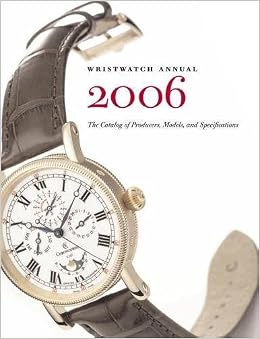
Free PDF Wristwatch Annual 2006: The Catalog Of Producers, Prices, Models And Specifications

A referred will be chosen to acquire the precise methods of how you make the offer of the scenario. As just what we refer, Wristwatch Annual 2006: The Catalog Of Producers, Prices, Models And Specifications has several objectives for you to pick as one of the sources. Initially, this is extremely linked to your issue currently. This book additionally uses basic words to utter that you could digest the details conveniently from that book.

Wristwatch Annual 2006: The Catalog Of Producers, Prices, Models And Specifications

Wristwatch Annual 2006: The Catalog Of Producers, Prices, Models And Specifications


Wristwatch Annual 2006: The Catalog Of Producers, Prices, Models And Specifications


Free PDF Wristwatch Annual 2006: The Catalog Of Producers, Prices, Models And Specifications

Do you think that reading is an important task? Locate your factors why including is necessary. Reading an e-book Wristwatch Annual 2006: The Catalog Of Producers, Prices, Models And Specifications is one component of satisfying tasks that will make your life quality much better. It is not about just exactly what sort of publication Wristwatch Annual 2006: The Catalog Of Producers, Prices, Models And Specifications you review, it is not just regarding how several publications you read, it has to do with the behavior. Checking out habit will be a way to make e-book Wristwatch Annual 2006: The Catalog Of Producers, Prices, Models And Specifications as her or his good friend. It will certainly no concern if they invest money as well as invest more books to finish reading, so does this e-book Wristwatch Annual 2006: The Catalog Of Producers, Prices, Models And Specifications

The Wristwatch Annual 2006: The Catalog Of Producers, Prices, Models And Specifications is guide that we now advise. This is not kind of big book. Yet, this book will help you to get to the big idea. When you pertain to read this publication, you could obtain the soft documents of it and wait in some different gadgets. Obviously, it will depend on just what device that you own and do. For this case, guide is advised to save in laptop computer, computer system, or in the gizmo.

Besides, this publication is additionally written by one of one of the most popular author in the country. So, when you appreciate the writer a lot, it will certainly finish the collections of the literary works. But, when you are not really follower of the author, you could still love Wristwatch Annual 2006: The Catalog Of Producers, Prices, Models And Specifications due to the fact that you will understand how the author tells the material to the viewers and culture. You can make deal with this book as one of referred details to make you really feel admired so much with this book.

The publications Wristwatch Annual 2006: The Catalog Of Producers, Prices, Models And Specifications, from easy to complex one will be a really useful operates that you could require to transform your life. It will not give you adverse declaration unless you do not get the definition. This is undoubtedly to do in checking out a publication to get rid of the significance. Generally, this e-book qualified Wristwatch Annual 2006: The Catalog Of Producers, Prices, Models And Specifications is checked out considering that you really like this sort of publication. So, you could obtain less complicated to comprehend the perception and also definition. Once again to constantly remember is by reviewing this book Wristwatch Annual 2006: The Catalog Of Producers, Prices, Models And Specifications, you could satisfy hat your inquisitiveness start by finishing this reading publication.

Wristwatch Annual 2006: The Catalog Of Producers, Prices, Models And Specifications

About the Author

Peter Braun is editor-in-chief of Germany’s renowned wristwatch magazine, Armbanduhren.

Read more

Excerpt. © Reprinted by permission. All rights reserved.

Dear Readers, The new watch year is definitely under the seal of creativity. Large or small, each and every brand is doing everything humanly possible to bring the consumer the utmost in new ideas for his or her money. This applies to both the outside and the inside of the watch. Highly publicized statements of recent years released by the Swatch Group have really done their job in getting other manufacturers going on movement productions of their own. Where just a few short years ago, one could count the number of manufacturers producing movements on two hands, today it is nearly impossible to keep up with the technological breakthroughs being achieved by creative companies situated at every level of the watch industry. This also applies to the complication that is generally acknowledged as the industry’s best and brightest: the tourbillon. Invented more than 200 years ago by Abraham-Louis Breguet to compensate for the effects of the earth’s gravity on a pocket watch’s rate, this traditional complication was kept alive by a handful of brands throughout the quartz years in wristwatches of uncommonly high quality and value. Perhaps it was Nicolas G. Hayek’s purchase of the then-dusty Breguet brand with the promise of reviving this complication on a broader scale, but since the complication on a broader scale, but since the complication’s highly publicized 200th anniversary in 2001, the number of brands incorporating the tourbillon into their own wristwatches has increased exponentially. While in 2001 there may have been fewer than fifteen companies to feature such a highlight in their collections, at last count in 2005 there were more than forty doing so. And some of the brands jumping on this “whirlwind bandwagon” are doing so without having first proved their horological competence or even built up to it by first presenting complications of less grandeur. An obvious question regarding the sheer number of tourbillon movements springing up remains: What type of place in the industry cant this type of tourbillon occupy? And where can things go from here? And that is the really interesting question. Where things go from here will, in our opinion, be in a totally different direction. Companies will begin to manufacture their own, more creative complications—different complications, creative technology that will not have Monsieur Breguet’s signature on it. And that is good for everyone. These complications don’t have to be, and won’t be, great or even important in the larger scheme of things. Companies won’t reinvent the wheel, but they will show that Switzerland and Germany’s watchmakers are staying on a mechanical roll. And this new phase has actually already begun. Just take a look at some of the new brands, watches, and complications cropping up: Carl F. Bucherer’s TravelTec is a good example. So is the brand Hautlence. And look for a dynamite in-house progression made by Scalfaro in 2006. The list goes on… …and most of this list will be found within these pages. So we hope you enjoy perusing the new collections and ideas produced by these creative heads and invite you to turn the page and begin!

Read more

Product details

Paperback: 432 pages

Publisher: Abbeville Press; 8th 2006 ed. edition (December 1, 2005)

Language: English

ISBN-10: 0789208628

ISBN-13: 978-0789208620

Product Dimensions:

8 x 0.8 x 11.5 inches

Shipping Weight: 2.9 pounds (View shipping rates and policies)

Average Customer Review:

4.4 out of 5 stars

18 customer reviews

Amazon Best Sellers Rank:

#1,088,790 in Books (See Top 100 in Books)

mus have for collectors - lots and lots of pictures

very pleased

Great 2006 overview as to what is available in the Mechanical Watch Industry from some of the more prominent watchmakers.

In an annual catalogue of watches I would expectt to see all the models produced in the world in that year, either gents or ladies, expensive ones or poor man watch.But here you won't definitely find them.Here you will see ONLY expensive European gents watches. And not even the Grand Seiko. Is it a watch catalogue? No, it is only pure advertising. The worse one.

I love this catalog. it is very informative and a great collectible for any/or watch collectors. this is a must buy!

I really enjoyed this annual of watches. I am an admirer of elegant watches and this manual was able to depict those models as well as estimated prices.I was also pleased with the prompt delivery and condition of my book when it arrived.

The book is just as discribed and with fast delevery, no problem ordering again. The book is in perfect condition and quality.

I found this annual to help me with all my sales products and a great study guide. I would highly recomend it to anyone to keep up with the industry. Of interest to read, but a better source for information and sales...

Wristwatch Annual 2006: The Catalog Of Producers, Prices, Models And Specifications PDF
Wristwatch Annual 2006: The Catalog Of Producers, Prices, Models And Specifications EPub
Wristwatch Annual 2006: The Catalog Of Producers, Prices, Models And Specifications Doc
Wristwatch Annual 2006: The Catalog Of Producers, Prices, Models And Specifications iBooks
Wristwatch Annual 2006: The Catalog Of Producers, Prices, Models And Specifications rtf
Wristwatch Annual 2006: The Catalog Of Producers, Prices, Models And Specifications Mobipocket
Wristwatch Annual 2006: The Catalog Of Producers, Prices, Models And Specifications Kindle

Wristwatch Annual 2006: The Catalog Of Producers, Prices, Models And Specifications PDF

Wristwatch Annual 2006: The Catalog Of Producers, Prices, Models And Specifications PDF

Wristwatch Annual 2006: The Catalog Of Producers, Prices, Models And Specifications PDF

Sabtu, 19 Maret 2016

Posted by hownottolivealife.blogspot.com In | No comments

Download PDF

Thanks for visiting our stunning site. This is an internet site that could make everybody really feel so happy. This is the one that will supply all contended book collections from the authors around the world. Discovering guide from various other countries in this rest is easy, furthermore to discover the books for within the nation. That will certainly be so easy then.


Download PDF

. A job may obligate you to constantly enhance the understanding as well as encounter. When you have no sufficient time to improve it straight, you could get the experience and also expertise from reading the book. As everybody recognizes, book is incredibly popular as the home window to open up the world. It suggests that reviewing book will provide you a brand-new way to find everything that you need. As guide that we will certainly offer below,

The important things to do and get rid of with the presence of the requirements can be accomplished by taking such presented feature of book. Customarily, publication will work not just for the knowledge and also something so. But, virtually, it will also reveal you just what to do and not to do. When you have wrapped up that the book offered, you may be able to discover just what the writer will share to you.

Because of the two bog contrast differences, we mean you to start caring reading books. Also those are the extremely straightforward publications; you will possibly need it one day. Guide that we accumulate here is additionally conceptualized the life to live much better. The likewise gives you the remarkable knowledge of what you do not act situation. This is the little couple of part of the big bargain reviewing publications.

From some problems that are presented from the books, we always become interested of how you will certainly get this book. Yet, if you feel that hard, you could take it by following the link that is given in this web site. Find also the various other checklists of the books that can be possessed and checked out. It will certainly not restrict you to just have this book. But, when ends up being the first choice, just make it as real, as what you actually intend to seek for and get in.

Product details

File Size: 1361 KB

Print Length: 241 pages

Publisher: Other Press (August 26, 2008)

Publication Date: September 9, 2008

Language: English

ASIN: B001EUGCTI

Text-to-Speech:

Enabled

P.when("jQuery", "a-popover", "ready").execute(function ($, popover) {

var $ttsPopover = $('#ttsPop');

popover.create($ttsPopover, {

"closeButton": "false",

"position": "triggerBottom",

"width": "256",

"popoverLabel": "Text-to-Speech Popover",

"closeButtonLabel": "Text-to-Speech Close Popover",

"content": '

' + "Text-to-Speech is available for the Kindle Fire HDX, Kindle Fire HD, Kindle Fire, Kindle Touch, Kindle Keyboard, Kindle (2nd generation), Kindle DX, Amazon Echo, Amazon Tap, and Echo Dot." + '
'

});

});

X-Ray:

Enabled

P.when("jQuery", "a-popover", "ready").execute(function ($, popover) {

var $xrayPopover = $('#xrayPop_6F7DB2C854E911E9A3ADEA78A5A64FC5');

popover.create($xrayPopover, {

"closeButton": "false",

"position": "triggerBottom",

"width": "256",

"popoverLabel": "X-Ray Popover ",

"closeButtonLabel": "X-Ray Close Popover",

"content": '

' + "X-Ray is available on touch screen Kindle E-readers, Kindle Fire 2nd Generation and later, Kindle for iOS, and the latest version of Kindle for Android." + '
',

});

});

Word Wise: Enabled

Lending: Not Enabled

Screen Reader:

Supported

P.when("jQuery", "a-popover", "ready").execute(function ($, popover) {

var $screenReaderPopover = $('#screenReaderPopover');

popover.create($screenReaderPopover, {

"position": "triggerBottom",

"width": "500",

"content": '

' + "The text of this e-book can be read by popular screen readers. Descriptive text for images (known as “ALT text”) can be read using the Kindle for PC app and on Fire OS devices if the publisher has included it. If this e-book contains other types of non-text content (for example, some charts and math equations), that content will not currently be read by screen readers. Learn more" + '
',

"popoverLabel": "The text of this e-book can be read by popular screen readers. Descriptive text for images (known as “ALT text”) can be read using the Kindle for PC app if the publisher has included it. If this e-book contains other types of non-text content (for example, some charts and math equations), that content will not currently be read by screen readers.",

"closeButtonLabel": "Screen Reader Close Popover"

});

});

Enhanced Typesetting:

Enabled

P.when("jQuery", "a-popover", "ready").execute(function ($, popover) {

var $typesettingPopover = $('#typesettingPopover');

popover.create($typesettingPopover, {

"position": "triggerBottom",

"width": "256",

"content": '

' + "Enhanced typesetting improvements offer faster reading with less eye strain and beautiful page layouts, even at larger font sizes. Learn More" + '
',

"popoverLabel": "Enhanced Typesetting Popover",

"closeButtonLabel": "Enhanced Typesetting Close Popover"

});

});

Amazon Best Sellers Rank:

#38,159 Paid in Kindle Store (See Top 100 Paid in Kindle Store)

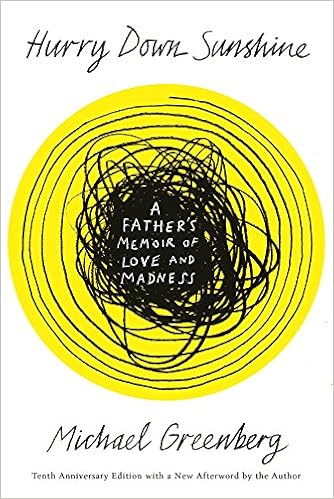
Michael Greenberg's brilliant and mesmerizing memoir of his daughter's madness is a poignant and terrifying book about the depths and peaks of mania and the desperate struggle that a loved one will go to in order to bring someone back from the world of psychosis.When Greenberg's daughter, Sally, first becomes psychotic, he thinks it is more her creativity than anything else. He is slow to recognize her manic state. But then, who would first assume that someone they love has gone to a place of madness. "But how does one tell the difference between Plato's "divine madness" and gibberish? Between enthousiasmos (literally, to be inspired by a god) and lunacy? Between the prophet and the "medically mad"."A long journey ensues for Sally and her familiy: hospitalization, horrendous pharmacological interventions, psychiatric care, day hospitals, regimens for behavioral therapy and behavioral contracts. The medications make her weary and unable to concentrate. She becomes sluggish and unlike her quick and creative self. Her father decides to try the medication to get an idea of what it is doing to Sally. He says, "It begins to hit me - - in waves. I feel dizzy and far away, as if I am about to fall from a great height but my feet are nailed to the edge of the precipice, so that the rush of the fall itself is indefinitely deferred. The air feels watery and thick, until finally I am neck-deep in a swamp through which it is possible to move only with the greatest of effort, and then only a few feet at a time". Such is the state that his daughter is in with the medicine. Without it, however, she is mad.Her identity becomes obscured. Who is this beloved daughter? How did she get to the state she is in? "I keep asking myself the obvious question, the helpless question. How did this happen? And why? One has cancer or AIDS, but one is schizophrenic, one is manic depressive, as if they were innate attributes of being, part of the human spectrum, no more curable than one's temperament or the color of one's eyes." The author struggles with how to view his beloved Sally, how to separate her from her disease, how to separate himself from her disease.The book is peopled by interesting characters. There is Steve, the author's mentally ill brother for whom he is caretaker. There is a family of Hasidic Jews in the Psychiatric unit, looking over and caring for one of their own. There is the author's wife, a dancer and choreographer who loves Sally very much. There is Sally's biological mother, the author's ex-wife, who is paralyzed with fear at Sally's illness and first hopes that some homeopathic remedies will make a difference. There is the author's well-dressed and lovely mother who searches her past to assure the author that Sally is not, absolutely is not, like his brother Steve.Sally eventually reaches an equilibrium of recovery and remission from her manic depression. She is able to return to school though she is fearful and reticent about her history as a "mental patient". The story has no happy ending, as the disease does not just disappear. It may hide for a while but it is ever present. Sally has a lifetime of heavy-duty medications and psychiatric interventions in order for her to maintain a semblance of normalcy. She is forever in the grips of the mental health system, a system not always user friendly to families and loved ones.The author paints a realistic and painful picture of what mental illness in a family can do to the victim and her loved ones. It is a powerful picture, one that is not soon to be forgotten. Anyone who has every dealt with mental illness or has an interest in it will be enriched by this book. It is a must-read for any person who loves someone who is mentally ill or is touched by mental illness in any way. This means all of us.Bonnie Brody

Good read. I have no experience at all with mental illness, thank God, so I picked this story out of curiosity. The way Sally's father describes her before her breakdown made her sound like a brat. Her strength, however, in the face of a lifelong battle with serious illness, leaves me hoping for her very best life.

This is a well-written, first-hand account of a teenage girl's mental breakdown and painful recovery, as seen through the eyes of her father. For those interested in the topic of mental health, this is a page-turner. I read it from beginning to end in one day. It's a raw an honest look at one family's experience with mental illness and the process of denial, shame and finally, acquiescence, to a disease they were unfamiliar with.I would have liked to have understood more about the days/weeks/months leading up to the daughter's final "snap." But overall, the story is fascinating, if not heartbreaking. Readers who enjoyed "An Unquiet Mind" will enjoy Hurry Down Sunshine.

A memoir written as experienced by the author a blunt, yet vividly told story of the role loved ones play when someone close to them learns to live with psychosis. Greenberg allows the readers the opportunity to view from the perspective of a fly on the wall.

The book opens with the author's daughter going "mad". Caught in a fit of mania, she's admitted to the psych ward in NYC. Her father, stepmother, mother, brother, and grandmother all approach her mania differently, but her father is the most perplexed by it and therefore driven to try to understand it.Previously Sally was a vibrant, creative teenager who one day, seems to lose it completely. After she's admitted to the hospital and her family begins learning about her illness (she's eventually diagnosed with bipolar disorder) they begin to see the signs they missed, before her mania spun so far out of control.If anyone has had any experience with bipolar disorder, this is an interesting read without being overly medical or clinical.

PDF
EPub
Doc
iBooks
rtf
Mobipocket
Kindle

PDF

PDF

PDF
PDF

Jumat, 04 Maret 2016

Posted by hownottolivealife.blogspot.com In | No comments

PDF Ebook Can Democracy Work?: A Short History of a Radical Idea, from Ancient Athens to Our World, by James Miller

As recognized, publication is a very good source to take when you are preparing to do something, having trouble to fix, or having task for target date. It can be a friend for you to invest the moment beneficially. Promo regarding this publication has actually been in different methods. As below, we offer you're the Can Democracy Work?: A Short History Of A Radical Idea, From Ancient Athens To Our World, By James Miller because it truly provides fantastic system of someone to review it.

Can Democracy Work?: A Short History of a Radical Idea, from Ancient Athens to Our World, by James Miller

Can Democracy Work?: A Short History of a Radical Idea, from Ancient Athens to Our World, by James Miller


Can Democracy Work?: A Short History of a Radical Idea, from Ancient Athens to Our World, by James Miller


PDF Ebook Can Democracy Work?: A Short History of a Radical Idea, from Ancient Athens to Our World, by James Miller

Challenging the brain to believe far better as well as quicker can be undergone by some means. Experiencing, listening to the other experience, adventuring, examining, training, and also a lot more functional tasks could assist you to improve. However below, if you do not have adequate time to obtain the important things straight, you can take a very simple way. Reading is the most convenient task that can be done anywhere you desire.

Obtaining guides Can Democracy Work?: A Short History Of A Radical Idea, From Ancient Athens To Our World, By James Miller now is not kind of challenging way. You could not simply going for publication shop or collection or borrowing from your buddies to review them. This is an extremely straightforward means to precisely obtain the publication by online. This on the internet publication Can Democracy Work?: A Short History Of A Radical Idea, From Ancient Athens To Our World, By James Miller can be among the choices to accompany you when having downtime. It will not waste your time. Believe me, guide will reveal you new thing to read. Just invest little time to open this on-line book Can Democracy Work?: A Short History Of A Radical Idea, From Ancient Athens To Our World, By James Miller and read them any place you are now.

By obtaining the Can Democracy Work?: A Short History Of A Radical Idea, From Ancient Athens To Our World, By James Miller in soft data, as talked formerly, lots of advantages can be obtained. Besides, as what you recognize, this publication supplies fascinating statement that makes individuals interested to read it. When you determine to read this publication, you could start to recognize that book will always provide good things. This book is really simple and also provides big results.

When his is the time for you to constantly make manage the feature of guide, you could make offer that guide is actually advised for you to obtain the best idea. This is not just best suggestions to obtain the life but also to undergo the life. The way of living is sometimes conformed to the instance of perfections, yet it will be such point to do. And now, guide is once again recommended here to check out.

Can Democracy Work?: A Short History of a Radical Idea, from Ancient Athens to Our World, by James Miller

Review

"What makes the book compelling is its focus on colorful thinkers, activists, and political leaders who lived and breathed the democratic moment throughout history, from Pericles and Socrates in ancient Athens to Woodrow Wilson and Vladimir Lenin in the early twentieth century. Miller shows that democracy’s ascent is best seen not as a gradual unfolding of a political principle driven by reason and moral destiny but rather as a grand roller coaster ride of struggle, revolution, and backlash. Today’s populist outbursts look quite ordinary alongside this history." ―G. John Ikenberry, Foreign Affairs"The strength of this book lies . . . in the exquisite portraits it paints of characters who stand behind the immortalized Pericles, Robespierre, and Thomas Jefferson . . . [Miller] forces the reader to sit up and realize that history isn’t a definitive grayed parchment beyond reproach, but actually a living force constantly capable of new interpretation and meaning in our current world. . . Like the ekklesia in Athens, the constituent assembly in Versailles, and the soviet in Petrograd – Can Democracy Work? offers insightful context on how our own body politic will survive these turbulent times." ―John Colin Marston, The Christian Science Monitor“This is a bold, eloquent, and utterly convincing history of what democracy has meant and should mean―from the Assembly of ancient Greece to the anti-Trump resistance. James Miller has produced one of the wisest reflections on the glories and limits of popular rule I have ever read."―Michael Kazin, author of The Populist Persuasion: An American History“Democracy has always been at the center of James Miller’s career, whether he was investigating the sublime theories of the Enlightenment or the street politics of the 1960s. Now, at the very moment of democracy’s apparent endangerment, one of its best friends offers up the most capacious and inspiring history of it ever composed. From the Greeks to the present, Miller’s light touch and profound insight join each other on every page to make this a truly indispensable work for the present crisis.” ―Samuel Moyn, author of Not Enough: Human Rights in an Unequal World“No one is better qualified to wrestle with the riddle of democracy than James Miller, which is why I have been eagerly awaiting this brilliant and necessary book. Can Democracy Work? is an eloquent, clear-eyed account of democracy’s myriad challenges. This concise and compelling history deserves to be read and debated by all who still dare to dream of a society of equals. These pages left me feeling better prepared and reinvigorated to work toward a more democratic future.” ―Astra Taylor, director of What is Democracy? and author of The People’s Platform“James Miller, who has illuminated democracy's radical possibilities, now offers some sharp reflections on how those possibilities have fared over the centuries. At a moment when the very meaning of the word is up for grabs, Miller brings us back to philosophical essentials as forged by contingency, contradiction, and human folly. Refreshing and unsettling, here is some political intelligence in a dark and confusing time.” ―Sean Wilentz, author of The Rise of American Democracy“Distinguished historian of ideas James Miller’s short history of democracy and its different meanings is both compulsive and compulsory reading for our sometimes shockingly disenchanted times. Ever optimistic, Miller remains enamored of his native United States’s striking experiment in cosmopolitan self-governance, and stands proudly and persuasively tall for liberal―and democratic―ideals.” ―Paul Cartledge, author of Democracy: A Life“This sharp, spirited, engaged intellectual history of democracy, including its recent and often loose coupling with liberalism, combines an appraisal of both inherent and situational pitfalls with an appreciation of redemptive possibilities. If democracy is protean, what matters, this rich work teaches, is the quality of our normative choices and institutional imagination.” ―Ira I. Katznelson, author of Fear Itself: The New Deal and the Origins of Our Time". . . An attractively broad and accessible account of democracy from the Greeks to the present day. . .[guides] readers through the mass of difficult material with enviable clarity . . . [offers] impressive new evidence and analyses." ―David A. Bell, New York Review of Books "Engaging ....I’m particularly drawn to Miller’s investigation of a concept that most of us think we understand. As Miller demonstrates, “democracy” deserves a second look." ―Stan Persky, Dooney's Cafe

Read more

About the Author

James Miller is a professor of politics and liberal studies at the New School for Social Research. He is the author of the critically acclaimed Examined Lives: From Socrates to Nietzsche; Flowers in the Dustbin: The Rise of Rock and Roll, 1947–1977; and Democracy Is in the Streets: From Port Huron to the Siege of Chicago.

Read more

Product details

Hardcover: 320 pages

Publisher: Farrar, Straus and Giroux (September 18, 2018)

Language: English

ISBN-10: 0374137641

ISBN-13: 978-0374137649

Product Dimensions:

6.4 x 1.2 x 9.1 inches

Shipping Weight: 1.2 pounds (View shipping rates and policies)

Average Customer Review:

4.6 out of 5 stars

6 customer reviews

Amazon Best Sellers Rank:

#96,541 in Books (See Top 100 in Books)

Miller's engaging voice doesn't prepare you for the insight or shock that comes from penetrating the surface of this idea, this attribute, this system, this brand on whose surface we've lived. But his writing makes it easy to press on as his narrative shreds assumptions and polemics, letting voices of the time tell the story, from Athens to the French and American revolutions.And yes, why is the word 'populist' tainted?And what about these demagogues, ancient and modern orange ones? If ever you've muttered "I love humanity, it's people I can't stand," you may find in this book you are not alone.

The ascent of the populist, authoritarian and generally disruptive governing style of Donald J. Trump in his latest starring role as “President of the United States” has rightfully generated substantial concern about the future of the "democratic experiment" and the entire notion of "government of laws, not men". Is a "government by the people, for the people, and of the people" possible? Did it ever really exist? In "Can Democracy Work?” historian James Miller has crafted a provocative, intellectually challenging history and analysis of this ideal form of government, extending from its advent in ancient Athens, through the American and French Revolutions, up to the present date. This short book on a very big topic is intellectually compelling and interesting."Can Democracy Work?” has an undercurrent of pessimism (or, if you prefer, realism). The author conveys the impression that democracy is a political Zeno's Paradox: no matter how close seekers of this model of governance might approach the democratic "ideal" (however defined), it's never actually achieved, nor can it be. Why not? Human nature. Miller cites Walter Lippmann, “The individual man does not have opinions on all public affairs. He does not know how to direct public affairs. He does not know what is happening, why it is happening, what ought to happen. I cannot imagine how he could know, and there is not the least reason for thinking, as mystical democrats have thought, that the compounding of individual ignorances in masses of people can produce a continuous directing force in public affairs…[common interests] can be managed only by a specialized class…” (The Phantom Public). He also paraphrases Robert Michel’s “Iron Law of Oligarchy”, this being an insight into the German Social Democratic Party (circa 1911) that still rings true: “…the SPD was an institution ostensibly dedicated to the spread of democracy in all areas of social life but it was in fact controlled by a torpid bureaucracy run by a tiny elite.” The whole notion that the average citizen can and will contribute meaningfully to governance (i.e. “participatory democracy”) can be dismissed with a pithy aphorism attributed to Oscar Wilde, “The trouble with socialism is it takes too many evenings”. Hence, the devolution of democratic governance into a small ruling cadre of elites that’s more or less responsive to a more or less engaged, more or less knowledgeable and informed citizenry.The late John Adams wrote “there has never been a democracy yet that did not commit suicide. Governance seemingly demands a technocratic and selfless political class ” due to the immensely complicated nature of statecraft. It doesn't look too hopeful in that regard yet one hopes that deciders act for the common good and, if they fail do so both responsively and responsibly, the bosses will be subject to recall and orderly replacement. That's not happening.Given all this, the wave of authoritarian governments supplanting nascent democratic states in the EU and elsewhere isn’t surprising but it is expected and understandable as Miller implies. So too is the newly fashionable acceptance of "illiberal democracy" in certain circles here at home and abroad: the embrace of illiberal and authoritarian rulers exerts an understandable appeal. So does the revival of utopian socialism.Miller's cited authorities are used to maintain a baseline level of optimism. He accomplishes this by historical example and thoughtful sampling of works of great political thinkers from ancient times thorough the present. He wants the reader to understand that “this has happened before” so the current crisis of democracy suggests the “karmic cycle” is closing once again, maybe to be reborn in a better and purer form. Maybe though John Adams was right about democracy. As history and Homer Simpson declare, “Well, duh!”

Can Democracy Work? A Short History of a Radical Idea, from Ancient Athens to Our World by James Miller is a history of democracy in its various forms throughout history. Miller Miller is an American writer and academic. He is known for writing about Michel Foucault, philosophy as a way of life, social movements, popular culture, intellectual history, eighteenth century to the present; radical social theory and history of political philosophy. He currently teaches at The New School.Democracy* is a term that has been used for so long and in so many ways that it has lost its meaning. North Korea claims to be a Democratic People's Republic. Russia is an authoritarian regime with superficial democratic fringe. Greece is the so-called cradle of democracy, but how democratic was it really? What percentage of the population were allowed to participate? Positions of authority at times were chosen by lot since elections were seen as corrupt. Even today, in America, elections are about money. LBJ was successful because of people in Congress who owed him favors. Political machines tainted American democracy.America's founding fathers were not in favor of democracy and looked to the Roman Republic as a source for stable government rather than Athens. The original federal government was small and did little compared to day's government. Democratic types of government work best in small groups. In large groups mob rule and the tyranny of the majority are likely to take place. Divided government slows the actions of mob rule somewhat. Major events can still trigger rapid action. 9/11 triggered a piece of legislation called the Patriot Act. Legislators admitted not reading it before voting for it. This would not have happened without the act of terror. It created a type of "mob rule" or general will, as Rousseau would have called it, that bucked the system of government.Miller also includes one of the maligned Western political thinkers, Machiavelli. Machiavelli was a republican and believed in representational government and more importantly, he believed in citizen militias. If the citizens had a stake in their government they would be willing to defend it. Inclusion into governing has been debated limited and expanded and limited again. White (or native) men who held land were usually given the right to vote. Sometimes military service was also a condiction. Does expanding the number of voters help or hinder the selection of a good leader. Would a larger pool of voters or a small pool of educated land-owning voters provide better results? That question still haunts the idea of democratic rule.Leaders in France, England, and Russia are also looked at in the historic sense along with American leaders like Andrew Jackson. Our current president is a fan of Andrew Jackson and the two do have much in common. Miller, in a well-cited work, discusses the history of democracy and its various forms in mainly in Athens, France, and the United States. Many misconceptions and inaccuracies are cleared up as well as detailing the French revolutions. Well written and extremely informative.*Democracy used in its widest sense to include direct democracy and representational democracies. Likewise, small "r" republican is used to describe a supporter of a republic, representational democracy.

Can Democracy Work?: A Short History of a Radical Idea, from Ancient Athens to Our World, by James Miller PDF
Can Democracy Work?: A Short History of a Radical Idea, from Ancient Athens to Our World, by James Miller EPub
Can Democracy Work?: A Short History of a Radical Idea, from Ancient Athens to Our World, by James Miller Doc
Can Democracy Work?: A Short History of a Radical Idea, from Ancient Athens to Our World, by James Miller iBooks
Can Democracy Work?: A Short History of a Radical Idea, from Ancient Athens to Our World, by James Miller rtf
Can Democracy Work?: A Short History of a Radical Idea, from Ancient Athens to Our World, by James Miller Mobipocket
Can Democracy Work?: A Short History of a Radical Idea, from Ancient Athens to Our World, by James Miller Kindle

Can Democracy Work?: A Short History of a Radical Idea, from Ancient Athens to Our World, by James Miller PDF

Can Democracy Work?: A Short History of a Radical Idea, from Ancient Athens to Our World, by James Miller PDF

Can Democracy Work?: A Short History of a Radical Idea, from Ancient Athens to Our World, by James Miller PDF

Bookmark Us

Delicious Digg Facebook Favorites More Stumbleupon Twitter

Search Our Site

Labels

Sample Text